- Published by:
- Department of Education
- Date:
- 3 Dec 2025
The Early Childhood Update e-newsletter is sent to early childhood teachers and workers, but is open to anyone interested in best practice in early years education and evidence-based teaching approaches. Subscribe here to receive the e-newsletter(opens in a new window).
Reflecting on 2025 and looking to the new year
Thank you for the commitment and professionalism shown during a year of challenges and achievement.
Dear early childhood education colleagues
As 2025 comes to a close, I want to acknowledge the incredible work happening across the sector. I'm grateful for the chance to celebrate some of the great achievements from the past year.
As part of the Best Start, Best Life reforms, Pre-Prep began this year in 6 local government areas (LGAs). Services across the state have also been getting ready for the next stage: Pre-Prep rolling out to priority families and in a further 12 LGAs next year.
I’d like to congratulate services on this work. The increased learning hours will give children more time to grow their skills and confidence, and to develop strong bonds with their teachers and educators and with each other.
We will continue to provide support and resources as you deliver these changes. In this edition we introduce a Conversations with families about Pre-Prep resource to help you share information with families. The Kindergarten Sector Guide has also been updated and contains all key information on the Best Start, Best Life reforms.
In 2025, more than 145,000 children and families benefitted from free Three and Four-Year-Old Kindergarten programs. The Three-Year-Old Kindergarten roll-out continued, working towards 15 hours per week across the state. This built on last year’s incredible achievement of more than 80 per cent of funded kindergarten services delivering 10 to 15 hours of play-based learning each week.
Also this year, we have opened 66 new or expanded kindergartens. This includes 20 new kindergartens at government schools and 46 kindergartens on sector land. This will create more than 7,000 additional places, giving more children access to quality programs.
In 2026, we will open 24 kindergartens at government schools and 36 kindergartens on sector land.
We opened the doors to the first 4 Early Learning Victoria centres, with a further 14 to open in 2026, creating more than 1,400 new licensed places.
Crucially, in 2026 we will keep investing in you, the early childhood education workforce. Be sure to look at the new Early Childhood Quality Hub. It has free professional development courses and great resources for early childhood professionals in Victoria.
Child safety updates
This year has brought important reforms in child safety that will strengthen the early childhood education and care (ECEC) system and put in place stronger safeguards to protect Victorian children.
Following the Rapid Child Safety Review, the Victorian Parliament has now passed legislation to make the ECEC sector safer for children. This includes the establishment of a new independent regulator in our state, with the Victorian Early Childhood Regulatory Authority (VECRA) to start operation on 1 January 2026. There have also been important changes made to the National Law to strengthen the regulatory framework for all ECEC services. More details on what these changes will mean for the sector will be provided soon.
Thank you for your commitment to improving children's outcomes. Your hard work is critical in making lasting safety changes for Victorian children and families.
Other important information
Today (Wednesday 3 December) is International Day of People with Disability. We are committed to ensuring all children can take part in and enjoy high-quality early childhood education. We see benefits for all children when they learn with peers of different abilities and backgrounds. In this edition, read about an educator in Melbourne's north who is supporting children with additional needs to thrive.
In another significant milestone for Victorians and Australians, the Statewide Treaty will officially begin this month, with a ceremonial exchange between the Government and the First Peoples’ Assembly of Victoria at a public event at Federation Square on 12 December. Victoria has been on a pathway towards Treaty for almost 10 years and is now the only Australian jurisdiction to have a Treaty in place. You can find out more at the Treaty Victoria website. Early childhood services will continue to play an important role in supporting First Nations children to be strong in their identity, and supporting all Victorian children to learn about First Nations culture and history.
Thank you for your work supporting Victorian children and families this year.
I wish everyone a safe and happy holiday period. I hope you’re able to take a well-deserved break and enjoy quality time with your loved ones.
Tony Bates PSM
Secretary
Department of Education
Early Childhood Workforce Register
Complete the quarterly update in Arrival by 5 December 2025 and add recruitment agency staff working at your service.
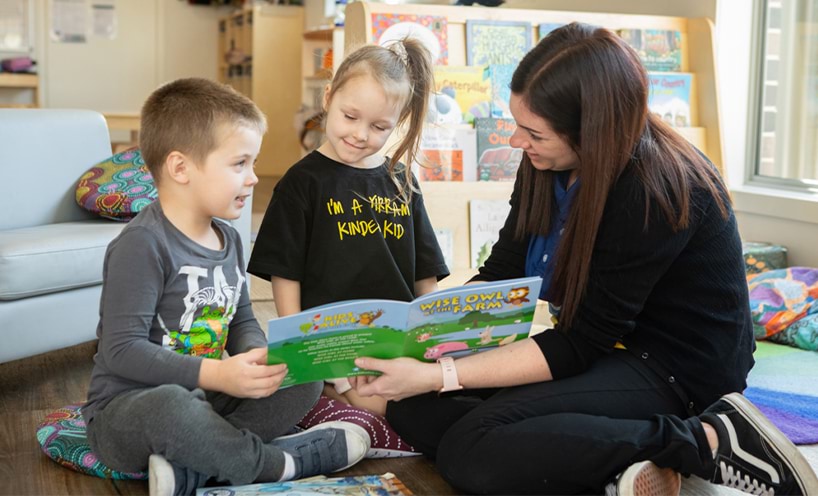
In July 2025 the Victorian Government implemented the first phase of the Victorian Early Childhood Workforce Register (Workforce Register).
A reminder that the next quarterly update for the Workforce Register closes on Friday 5 December 2025.
As part of their funding requirement, approved service providers must:
- review their workforce information in Arrival
- add or update the information if there have been changes
- record details about all recruitment agency staff who have worked at the service since Friday 1 August 2025
- confirm the information is up to date and accurate using the new confirmation functionality.
Arrival has had a system update to make it easier for providers to confirm this information has been reviewed and is correct.
Recruitment agency staff
The scope of the Workforce Register has expanded to include recruitment agency staff. It applies to any agency staff that have worked at the service from 1 August 2025.
Providers must record information in Arrival about all agency staff who have direct contact with children as part of their usual duties. As with employees, this applies to agency staff that work in any room across the service. It includes staff that, for example, might work with children under 3.
Agency staff will need to be recorded on the ‘Workforce’ tile in Arrival.
The following information must be recorded:
- preferred name
- full street address (home)
- mobile phone number (personal)
- email address (personal)
- Working with Children Check (WWCC) number
- WWCC – date/month/year.
- *recruitment agency trading name (selected using a drop-down menu in Arrival, or entered in a free text box)
- *dates an agency staff member worked (with options to select as ‘single’, ‘multiple’ or ‘reoccurring’ day/s).
* New functions in Arrival that need to be entered for agency staff.
Service providers who receive kindergarten funding must add agency staff to the Workforce Register by Friday 5 December 2025.
Find out more
Updated guidance for using Arrival is available through the ‘Help’ link at the top right-hand corner of your Arrival system screen.
For technical support with using the system, please contact the Arrival Helpdesk:
- phone: 1800 614 810 between 9 am and 5 pm Monday to Friday
- email: Arrival.Helpdesk@education.vic.gov.au
If you have any other questions, please contact your local Early Childhood Improvement Branch.
Victorian Early Years Awards 2025 winners
Celebrating the outstanding work of early childhood professionals and services.
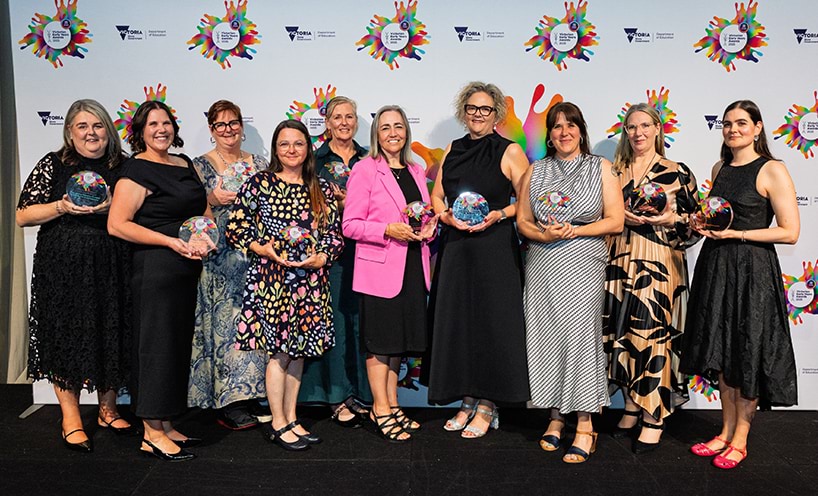
The 20th Victorian Early Years Awards winners were announced at a ceremony on Thursday 6 November 2025.
Radio broadcaster and author Jacinta Parsons hosted the awards, which celebrated the achievements of Victoria’s early years professionals and services.
The 9 winners show the vital work happening in the early years sector.
Each winner received a $15,000 grant, which they can use for professional development or to support their initiative in the early years sector.
To view some highlights from the evening, check out our video below.
Individual awards
The winners for their individual contributions to early childhood outcomes were:
- Early Childhood Teacher of the Year: Megan Hancock, from Southern Rise Children’s Centre. Megan works with Aboriginal families and Elders to create inclusive learning spaces.
- Educator of the Year: Sandra Houlahan, from Shine Bright Elmore Kindergarten. Sandra uses local places to create fun and meaningful learning opportunities. She created River Kinder, a program that helps children learn through nature.
On receiving the Early Childhood Teacher of the Year award, Megan shared her excitement and joy.
‘I’m completely humbled, shocked (and) amazed to win,’ she said.
Megan shared how important these awards are to celebrate the amazing work happening in the early years sector.
‘The awards and all the people here tonight show the commitment that we have to Victorian children - to closing gaps, to ensuring that no one is left behind and to ensuring that all children who are experiencing hardship get quality education and care. I love being one of the teachers able to provide that for our local community.’
Service and organisation awards
The services and organisations that received awards were recognised for:
- supporting parents
- working with others in the community
- improving child health and wellbeing
- achieving high-quality outcomes.
The recipients were:
- Improving Access and Participation in Early Learning: Victorian Aboriginal Community Services Association Ltd
- Supporting Parents to Build their Capacity and Confidence: Hume Community Hub Playgroups – Hume City Council
- Creating Collaborative Community Partnerships: Supporting families through collaborative early intervention – Gowrie Victoria Broadmeadows Valley
- Promoting Children’s Health and Wellbeing: ‘Working Towards’ to ‘Exceeding’ – Connie Benn Early Learning Centre
- Continuity of Early Learning: The Mooroopna Oral Language Initiative – Mooroopna Primary School
- The Emeritus Professor Collette Tayler Excellence in Educational Leadership award: Home Road Kindergarten
- The Aunty Rose Bamblett Koorie Early Years Legacy Award: Harrietville Bush Kinder.
The Minister’s Award
Finalists in each category were also eligible for the prestigious Minister’s Award, selected by the Minister for Children Lizzie Blandthorn.
This year’s winner of the Minister’s Award was Brave Foundation for its Supporting Expecting and Parenting Teens Program. The program provides support to young parents aged 25 years and under who had their first child as a teenager.
Find out more
For more information about this year’s winners and finalists, refer to Winners of the 2025 Victorian Early Years Awards.
For further enquiries, contact the department by email: early.years.awards@education.vic.gov.au
Victorian Skilled Visa Nomination program
Explore opportunities for early childhood teachers on temporary visas, and those located overseas, to work in Victoria.
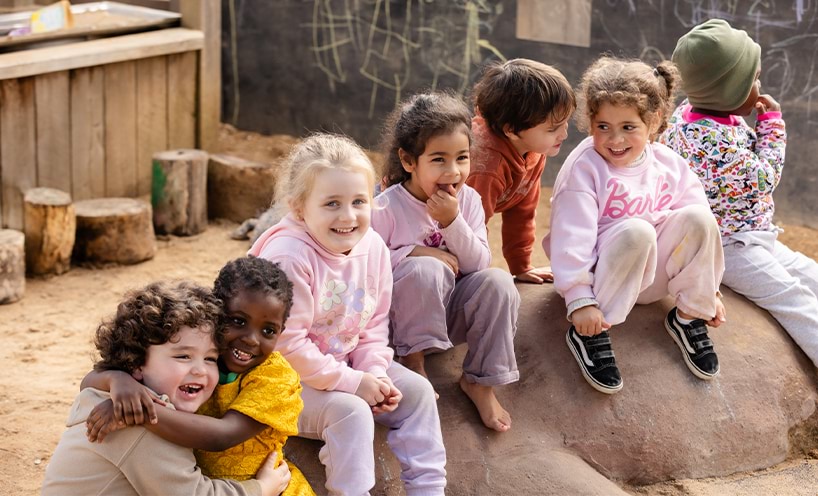
The Victorian Skilled Visa Nomination program helps qualified professionals to live and work in Victoria. Early childhood teachers (ECTs) are on the skilled occupation list and can apply for a visa.
This is a great chance to grow the workforce and support ECTs on temporary visas to stay and work in Victoria.
This is an opportunity for:
- service providers to promote the program to ECTs currently employed on temporary visas
- eligible ECTs living in Victoria and overseas to register their interest on the Live in Melbourne website.
Please share this article with ECTs in your service.
About the program
Victoria offers nomination for 2 visa types:
- Skilled nominated visa (subclass 190): this is a permanent visa. It lets skilled migrants live and work anywhere in Victoria, including Melbourne
- Skilled regional visa (subclass 491): this is a temporary 5-year visa. It allows holders to live and work in regional Victoria, with a pathway to permanent residency.
Nomination under the program:
- adds extra points to an applicant’s Australian visa application points test (5 points for subclass 190, 15 points for subclass 491)
- does not need employer sponsorship
- provides unrestricted work rights, following visa conditions.
Support available
ECTs in Victoria can access career supports and professional development opportunities. There is also financial support to help eligible ECTs with relocation, including:
- financial incentives for eligible ECTs currently working outside the Victorian early childhood sector who accept a job at any service delivering funded Kindergarten
- relocation supplements for anyone who receives an incentive and moves more than 100 kilometres from their current home to take up a role.
Find out more
For more information about the Victorian Skilled Visa Nomination program, refer to the Live in Melbourne website.
Free public transport
Share information about free public transport for under 18s from 1 January 2026, with parents and carers in your service.

From Thursday 1 January 2026, people aged under 18 can travel free on all Victorian public transport services. This includes trams, trains, buses and coach services.
Please share this information with parents and carers in your service, particularly those with children starting school next year.
Template text to share with families
From Thursday 1 January 2026, people aged under 18 can travel free on all Victorian public transport services. This includes trams, trains, buses and coach services.
Previously people aged 5 to 18 years could use a child myki card and buy a concession fare.
To access free travel from January, they must use a new youth myki card and tap the card on and off each time they travel. For areas that do not use myki cards, they must show their myki card to travel free.
More information about the youth myki card will be available later this month on the myki types webpage.
If your child is transitioning to school next year, you can find information about travel options, and support for eligible students, on the Travelling to school webpage.
Find out more
For further enquiries about public transport, contact Transport Victoria:
- phone: 1800 800 007
- website: Transport Victoria.
Get ready for the new kindergarten year
Resources to help you navigate the Best Start, Best Life reforms.
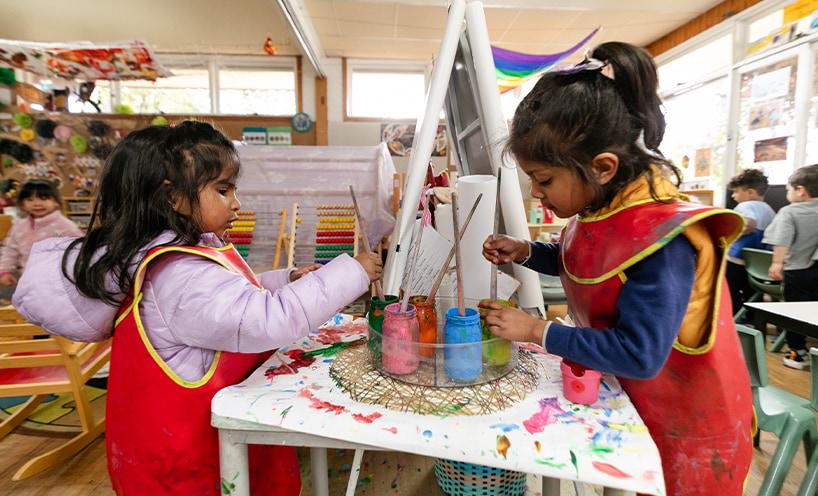
With 2026 approaching, it’s time to prepare for the new kindergarten year and refresh your understanding of the Best Start, Best Life reforms.
Next year is a big year in early childhood education, as Pre-Prep continues to roll out across Victoria. In 2026, Pre-Prep will be available to:
- children enrolled in kindergartens across 18 regional local government areas
- Aboriginal and Torres Strait Islander children
- children from a refugee or asylum seeker background
- children who have had contact with Child Protection
- children supported by Early Start Kindergarten or Access to Early Learning in 2025.
Resources to help you deliver Pre-Prep at your service
Resources are available to support kindergartens with the roll-out of Pre-Prep.
These can help everyone in your team, including service leaders, centre managers, teachers and educators.
- We have updated the Kindergarten Sector Guide in preparation for the 2026 kindergarten year. It brings together key information about the Best Start, Best Life reforms. It also includes information about supports to help children access and take part in kindergarten.
- The Expanding your early childhood education programs – Change management toolkit helps service leaders and centre managers to work with teams and families to get ready for Pre-Prep.
- The Delivering Pre-Prep to children from priority cohorts guide provides information about what to consider when setting up new program models to best support children.
- We have developed a new Conversations with families about Pre-Prep guide to help services share information with families.
- Two years of early childhood education – what the evidence says outlines the research supporting the case for children to spend 2 years in kindergarten. This can help you explain the benefits of kindergarten to families and your community.
Your local Early Childhood Improvement Branch can also provide tailored advice to suit your service, including on introducing Pre-Prep in 2026.
Find out more
For further enquiries, or to provide feedback, contact the Change Management team by email: bsbl.change.management@education.vic.gov.au
Conversations with families about Pre-Prep
A new resource is available to help services to explain Pre-Prep to families.

We have developed a Conversations with families about Pre-Prep guide to help services share information with families.
From next year, Pre-Prep becomes available to more eligible children. Services may receive more questions from parents and carers.
To support these conversations, the new guide has information about:
- what Pre-Prep is
- benefits of more hours
- when Pre-Prep will be available
- how services will deliver Pre-Prep (hours, cost, program)
- support for children with additional needs
- registering and enrolling in Pre-Prep.
It also includes links to resources for promoting Pre-Prep to your community. This includes 4 Pre-Prep videos that you can share on your social media channels and your website.
Please share this guide with staff to support them to talk about Pre-Prep.
A reminder that Victorian funded kindergarten services and eligible early childhood support services can access free on-site, telephone and video interpreters. Funded kindergarten services can also access translation services for written information.
Further resources
- Four-Year-Old Kindergarten is becoming Pre-Prep – includes the full Pre-Prep roll-out schedule and a starting year calculator.
- Communicating about kindergarten to your community – includes communication packs, fact sheets, social media tiles and videos.
- Victorian Kindergarten Resources Portal – order printed materials about the Best Start, Best Life reforms and Pre-Prep, including translated resources.
- Change Management Toolkit – information and tools to help you work with your team and families to plan and implement Pre-Prep and continue delivering Three-Year-Old Kindergarten.
- ‘Your guide to’ information sheets on multi-age groups, rotational models, team teaching and teaching longer days. These include advice about planning, the benefits of program models, and communicating with families.
- Engaging with multilingual families guide – information about creating inclusive environments, different ways to communicate, and getting the right language supports.
Find out more
For further enquiries, or to provide feedback on these resources, contact the department’s Change Management team by email: bsbl.change.management@education.vic.gov.au
For tailored advice and local knowledge, contact your local Early Childhood Improvement Branch.
Kinder Kits for 2026
Services will soon be contacted to confirm orders.
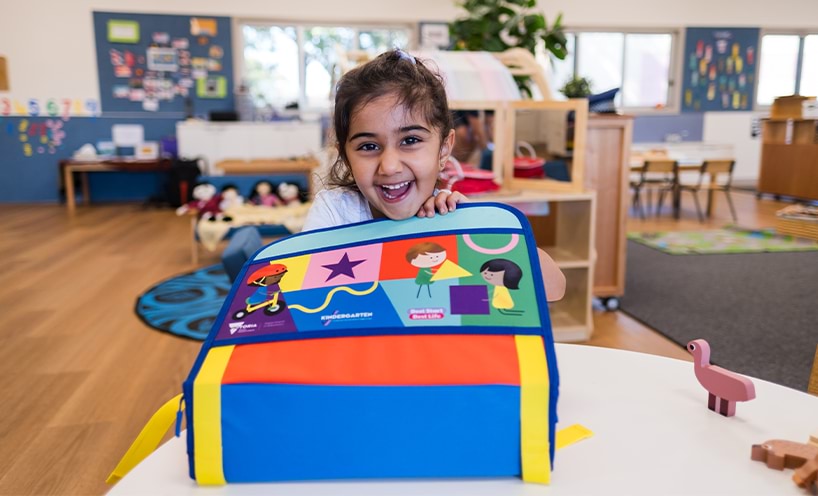
Kinder Kits are back for 2026 and will be available for every eligible child enrolled in funded Three-Year-Old Kindergarten.
Kinder Kits are backpacks filled with books, educational toys and activities made especially for 3-year-olds to enjoy at home.
The Kinder Kits logistics supplier will contact services directly from December 2025 into Term 1, 2026, to confirm Kinder Kit orders for your service.
Kinder Kits will be delivered throughout Term 1, 2026.
Eligibility
To be eligible for a Kinder Kit in 2026, a child must be starting either:
- funded Three-Year-Old Kindergarten
- their first year of Early Start Kindergarten
- their first year of Access to Early Learning.
Children are not eligible if they are:
- 3-year-olds in long day care but not a funded kindergarten program
- 4-year-olds in kindergarten or long day care programs.
Find out more
More information will be available on our webpage soon. Please refer to our Kinder Kits webpage for updates.
For further enquiries, contact the department by email: kinder.kits@education.vic.gov.au
Creating a classroom where diversity is embraced and celebrated
How educator Richa Kochar is helping students with additional needs to thrive.
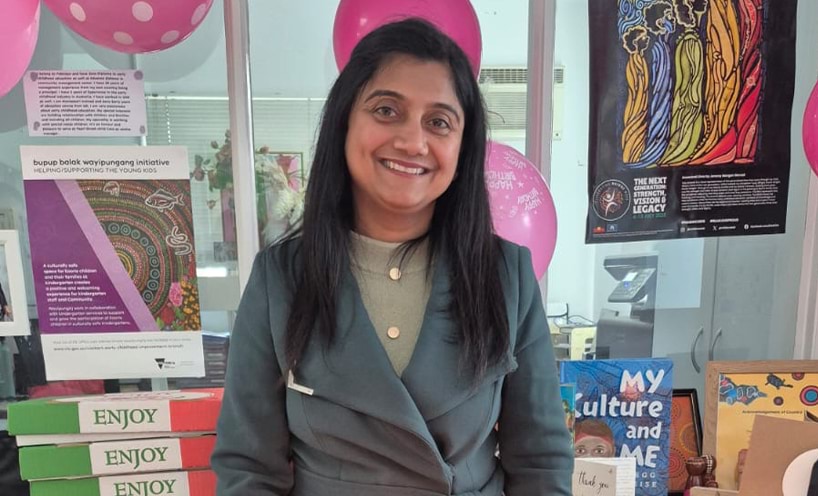
Wednesday 3 December is International Day of People with Disability (IDPwD), a day to recognise the 5.5 million Australians with disability.
It’s a chance to think about how we can make early childhood services and communities more inclusive.
We spoke with educator Richa Kochar, at Glenroy’s Small Friends Childcare and Education, to find out how she helps every child feel included.
Ensuring every child feels supported
Richa leads the Three-Year-Old Kindergarten room at the service.
Out of 16 children in the room, 9 have additional needs, including autism, attention deficit hyperactivity disorder (ADHD), and developmental delays.
With almost 10 years’ experience in early childhood education, Richa is passionate about inclusive learning.
‘My approach focuses on understanding each child’s strengths and learning needs. I then plan experiences that support their individual growth.
‘I use scaffolding strategies and adjust my teaching approach to suit each child’s learning style and pace,’ she said.
Richa uses inclusive practices, individual learning goals, and the support provided by the Kindergarten Inclusion Support Program to help each child engage and learn in kindergarten alongside their peers.
Creating joy and a sense of belonging
For Richa, the most rewarding part of her work is seeing children take pride in their achievements.
‘Whether it’s learning a new word, joining a group activity or trying something independently, those simple moments of growth bring so much joy.
‘Through inclusive practices, [all] children develop a stronger sense of curiosity, teamwork, and kindness — qualities that stay with them for life,’ Richa said.
Richa’s work reinforces the benefits of inclusive education for all children, not just those with additional needs.
‘It encourages a sense of belonging and community where every child learns that differences are valued,’ she said.
Richa chose a career in early childhood education to help children build strong foundations for learning. Seeing the impact that high-quality teaching has on children’s growth strengthens her ongoing commitment to the profession.
Find out more
For more information about IDPwD, refer to the International Day of People with Disability website.
For more information on the programs available to funded kindergartens to support inclusive learning, refer to:
Scholarship opens door to lifelong dream for early childhood educator
How the Early Childhood Scholarship Program helped Vikki Walker reach her goal of becoming a teacher.
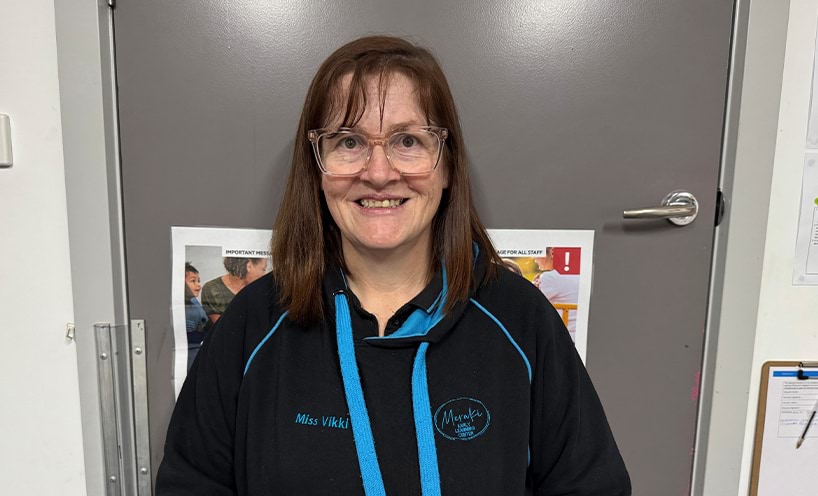
Vikki Walker, an early childhood teacher at Meraki Early Learning Centre in Melbourne’s eastern suburbs, always knew she wanted to work with children.
Having faced challenges growing up, she finished school in Year 8.
She later completed a Certificate III in Children’s Services followed by a Diploma of Early Childhood Education and Care.
Vikki dreamed of completing a bachelor’s degree and becoming an early childhood teacher, but it felt out of reach.
Overcoming challenges
This changed last year when Vikki received a scholarship through the Early Childhood Scholarship program.
The scholarship not only provided financial support to upskill but also gave Vikki the confidence to believe in herself.
‘With the challenges I faced growing up, I never believed that I would get anywhere in life.
'The scholarship made me feel like someone had faith in me for the first time,’ Vikki said.
Building confidence
Vikki completed a bachelor’s degree at Deakin University this year. During her studies, she realised her strengths as a teacher.
‘I discovered that I am good at what I do, and I can and do make a difference in the lives of young children.
‘I now have the qualification and skills to continue supporting children’s growth, development and learning,’ she said.
Balancing full-time work and study wasn’t easy but Vikki said the connections she made with other students were invaluable. They continue to support her today.
Looking to the future
Now teaching a Three-Year-Old Kindergarten program, Vikki is looking forward to continuing with the same group in Four-Year-Old Kindergarten next year.
‘I’m so excited to support them all and to watch the children grow and learn new skills,’ Vikki said.
Find out more
For more information about the Early Childhood Scholarship Program, including updated guidelines that provide participants with more flexibility to transition into employment in the sector after study, visit Financial support to study and work in early childhood.